Enquiries Around the Clock: AI Chat for Trades
Take quote, emergency and appointment enquiries after hours too, capture job details in structured form and arrange the callback. How to set up the assistant.
In plain language
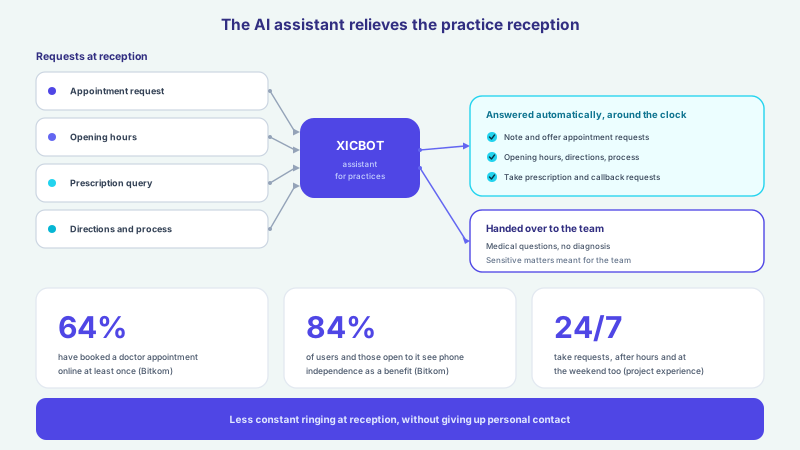
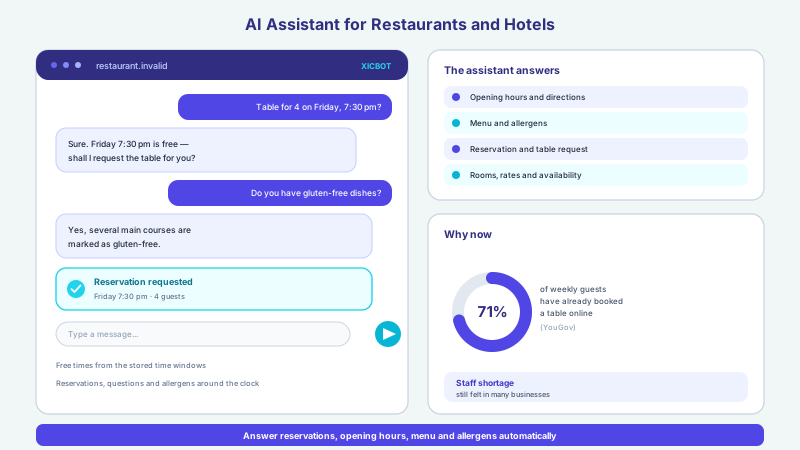
Many requests to trades come in after work hours. An assistant records them instead of losing them. Right at the start it separates emergencies from planned jobs. A burst pipe goes to your inbox with a reason. For other jobs it asks about place, scope, urgency and a callback time. A photo of the damage can be added on request. So the callback is well prepared. It is not meant to promise a price or give a diagnosis, and it can be wrong.
In the trades, whoever is reachable first often wins. Yet exactly when most enquiries arise, after hours, at the weekend or when a customer opens your website in the evening, no one is at the phone. Someone working on a roof, in the workshop or under a sink cannot take every call, and a missed call ends up on voicemail at best and with the next business at worst. The market is large: Germany has more than 1 million (Central Association of German Crafts) craft businesses employing around 6 million (Central Association of German Crafts) people, while 85 percent (Bitkom) of businesses see rising demands on their reachability for customers. An AI chat assistant on your own website closes this gap: it takes enquiries for quotes, emergencies and appointments around the clock, captures contact data and job details in a structured way and arranges the callback. This article shows how that works in the everyday reality of the trades, where the strengths and the limits lie, and how a missed enquiry turns into a cleanly captured job.
%3C%2Ftext%3E%3Ctext%20x%3D'72'%20y%3D'307'%20font-family%3D'system-ui%2C%20sans-serif'%20font-size%3D'7.5'%20fill%3D'%23cbd5e1'%3ECallback%3A%20Fri%2C%20from%208%3A00%20am%3C%2Ftext%3E%3Ctext%20x%3D'72'%20y%3D'322'%20font-family%3D'system-ui%2C%20sans-serif'%20font-size%3D'7.5'%20fill%3D'%23cbd5e1'%3EContact%3A%200171%203920042%3C%2Ftext%3E%3Crect%20x%3D'56'%20y%3D'348'%20width%3D'222'%20height%3D'24'%20rx%3D'12'%20fill%3D'%230f172a'%20stroke%3D'%23334155'%20stroke-width%3D'1'%2F%3E%3Ctext%20x%3D'68'%20y%3D'363'%20font-family%3D'system-ui%2C%20sans-serif'%20font-size%3D'7.5'%20fill%3D'%2364748b'%3EType%20a%20message%3C%2Ftext%3E%3Ccircle%20cx%3D'306'%20cy%3D'360'%20r%3D'13'%20fill%3D'%234f46e5'%2F%3E%3Cpath%20d%3D'M301%20354%20l12%206%20l-12%206%20z'%20fill%3D'%23ffffff'%2F%3E%3Ctext%20x%3D'563'%20y%3D'78'%20font-family%3D'system-ui%2C%20sans-serif'%20font-size%3D'11'%20font-weight%3D'700'%20fill%3D'%23312e81'%20text-anchor%3D'middle'%3EFrom%20after-hours%20chat%20to%20callback%3C%2Ftext%3E%3Ccircle%20cx%3D'342'%20cy%3D'199'%20r%3D'2'%20fill%3D'%236366f1'%2F%3E%3Cline%20x1%3D'342'%20y1%3D'199'%20x2%3D'410'%20y2%3D'199'%20stroke%3D'%236366f1'%20stroke-width%3D'2'%2F%3E%3Cpath%20d%3D'M410%20195%20l8%204%20l-8%204%20z'%20fill%3D'%236366f1'%2F%3E%3Crect%20x%3D'418'%20y%3D'100'%20width%3D'330'%20height%3D'58'%20rx%3D'10'%20fill%3D'%23ffffff'%20stroke%3D'%23e0e7ff'%20stroke-width%3D'1.2'%2F%3E%3Ccircle%20cx%3D'447'%20cy%3D'129'%20r%3D'11'%20fill%3D'%234f46e5'%2F%3E%3Ctext%20x%3D'447'%20y%3D'132.6'%20font-family%3D'system-ui%2C%20sans-serif'%20font-size%3D'10'%20font-weight%3D'700'%20fill%3D'%23ffffff'%20text-anchor%3D'middle'%3E1%3C%2Ftext%3E%3Ctext%20x%3D'470'%20y%3D'124'%20font-family%3D'system-ui%2C%20sans-serif'%20font-size%3D'9'%20font-weight%3D'700'%20fill%3D'%23312e81'%3EInquiry%20around%20the%20clock%3C%2Ftext%3E%3Ctext%20x%3D'470'%20y%3D'140'%20font-family%3D'system-ui%2C%20sans-serif'%20font-size%3D'7.5'%20fill%3D'%23475569'%3Eafter%20hours%20and%20on%20the%20job%20site%20too%3C%2Ftext%3E%3Crect%20x%3D'418'%20y%3D'170'%20width%3D'330'%20height%3D'58'%20rx%3D'10'%20fill%3D'%23ffffff'%20stroke%3D'%23e0e7ff'%20stroke-width%3D'1.2'%2F%3E%3Ccircle%20cx%3D'447'%20cy%3D'199'%20r%3D'11'%20fill%3D'%234f46e5'%2F%3E%3Ctext%20x%3D'447'%20y%3D'202.6'%20font-family%3D'system-ui%2C%20sans-serif'%20font-size%3D'10'%20font-weight%3D'700'%20fill%3D'%23ffffff'%20text-anchor%3D'middle'%3E2%3C%2Ftext%3E%3Ctext%20x%3D'470'%20y%3D'194'%20font-family%3D'system-ui%2C%20sans-serif'%20font-size%3D'9'%20font-weight%3D'700'%20fill%3D'%23312e81'%3EDetails%20captured%20cleanly%3C%2Ftext%3E%3Ctext%20x%3D'470'%20y%3D'210'%20font-family%3D'system-ui%2C%20sans-serif'%20font-size%3D'7.5'%20fill%3D'%23475569'%3Etrade%2C%20location%2C%20urgency%2C%20photos%3C%2Ftext%3E%3Crect%20x%3D'418'%20y%3D'240'%20width%3D'330'%20height%3D'58'%20rx%3D'10'%20fill%3D'%23ffffff'%20stroke%3D'%23e0e7ff'%20stroke-width%3D'1.2'%2F%3E%3Ccircle%20cx%3D'447'%20cy%3D'269'%20r%3D'11'%20fill%3D'%234f46e5'%2F%3E%3Ctext%20x%3D'447'%20y%3D'272.6'%20font-family%3D'system-ui%2C%20sans-serif'%20font-size%3D'10'%20font-weight%3D'700'%20fill%3D'%23ffffff'%20text-anchor%3D'middle'%3E3%3C%2Ftext%3E%3Ctext%20x%3D'470'%20y%3D'264'%20font-family%3D'system-ui%2C%20sans-serif'%20font-size%3D'9'%20font-weight%3D'700'%20fill%3D'%23312e81'%3EContact%20and%20preferred%20time%3C%2Ftext%3E%3Ctext%20x%3D'470'%20y%3D'280'%20font-family%3D'system-ui%2C%20sans-serif'%20font-size%3D'7.5'%20fill%3D'%23475569'%3Eprepared%20cleanly%20for%20the%20callback%3C%2Ftext%3E%3Crect%20x%3D'418'%20y%3D'310'%20width%3D'330'%20height%3D'58'%20rx%3D'10'%20fill%3D'%23312e81'%2F%3E%3Ccircle%20cx%3D'447'%20cy%3D'339'%20r%3D'11'%20fill%3D'%2322d3ee'%2F%3E%3Cpath%20d%3D'M442%20339%20l4%204%20l7%20-8'%20fill%3D'none'%20stroke%3D'%23312e81'%20stroke-width%3D'2'%20stroke-linecap%3D'round'%20stroke-linejoin%3D'round'%2F%3E%3Ctext%20x%3D'470'%20y%3D'334'%20font-family%3D'system-ui%2C%20sans-serif'%20font-size%3D'9'%20font-weight%3D'700'%20fill%3D'%23ffffff'%3ECallback%20arranged%3C%2Ftext%3E%3Ctext%20x%3D'470'%20y%3D'350'%20font-family%3D'system-ui%2C%20sans-serif'%20font-size%3D'7.5'%20fill%3D'%23a5b4fc'%3ECallback%20request%3A%20tomorrow%20from%208%3A00%20am%3C%2Ftext%3E%3Crect%20x%3D'40'%20y%3D'418'%20width%3D'720'%20height%3D'24'%20rx%3D'8'%20fill%3D'%23312e81'%2F%3E%3Ctext%20x%3D'400'%20y%3D'433.5'%20font-family%3D'system-ui%2C%20sans-serif'%20font-size%3D'9'%20font-weight%3D'600'%20fill%3D'%23e0e7ff'%20text-anchor%3D'middle'%3ENo%20lost%20job%20-%20take%20inquiries%20around%20the%20clock%20and%20arrange%20the%20callback%3C%2Ftext%3E%3C%2Fsvg%3E)
Labels in the illustration
- XICBOT
- Friday, 8:47 pm - after hours
- Heating is leaking, need
- an appointment urgently
- No problem, I will note this
- down. Your callback request
- for tomorrow goes to the team.
- Job captured
- Trade: plumbing / heating
- Location: 31185 Söhlde
- Urgency: high (emergency)
- Callback: Fri, from 8:00 am
- Contact: 0171 3920042
- Type a message
- From after-hours chat to callback
- 1
- Inquiry around the clock
- after hours and on the job site too
- 2
- Details captured cleanly
- trade, location, urgency, photos
- 3
- Contact and preferred time
- prepared cleanly for the callback
- Callback arranged
- Callback request: tomorrow from 8:00 am
- No lost job - take inquiries around the clock and arrange the callback
Why Enquiries Get Lost in the Trades
The phone is still the most important line to the customer in the trades, but it is a serial channel: it can only ever handle one conversation at a time, and it rings into the void precisely when both hands are on the workpiece. Anyone on a building site all day often does not hear it ring at all, and the customer with a burst pipe or a broken heating system does not wait long. They call the next business. On top of that comes the time limit: a large share of enquiries arises in the evening after work or at the weekend, outside any office hours. In exactly those hours no one at the business is reachable, and the enquiry fizzles out. For a sector that generates 783 billion euros (Central Association of German Crafts) in revenue a year, every lost enquiry is an unnecessary sacrifice of turnover.
At the same time, customer search behaviour has shifted. People research on their smartphone, often late at night on the sofa, and expect an immediate reaction. In the second quarter of 2026, 51.48 percent (Statista) of global web traffic came from mobile devices excluding tablets, and in Germany around 85 percent (Initiative D21) of people aged 14 and over used the internet on mobile in 2023. Anyone who finds only a contact form on a tradesperson's website, answered on the next working day, tends to bounce again. The skilled-worker shortage sharpens the problem from the other side: the trades alone are short of around 250,000 (Central Association of German Crafts) skilled workers by the association's estimate, and anyone already short of staff cannot also keep the phone staffed around the clock. An assistant that takes on the ever-same first questions relieves exactly this pressure.
Take Enquiries Around the Clock
The heart of a trades assistant is its constant reachability. While the phone has opening hours, the assistant is present on the website day and night and replies in seconds. It greets the visitor, understands the concern and guides it through a short, friendly conversation to a captured enquiry, without anyone at the business having to pick up the phone. For the customer it feels like a conversation with reception; for the business a clean record lands in the inbox at the end. The whole flow is deliberately designed to accommodate even the stressed caller who really just wants to know quickly whether and when they will be helped.
- Greeting that suits the page and a question about the concern
- Recognise the type of enquiry: quote, emergency or appointment
- Clarify trade, location and urgency with a few follow-up questions
- Capture contact data and, where useful, photos of the damage
- Hand the enquiry to the inbox or your system in structured form
- Arrange a callback at the preferred time or propose an appointment directly
In this way a single assistant covers the whole path from the first question to the prepared callback. It replaces neither the master craftsperson nor on-site advice, but it ensures no enquiry vanishes into nothing while you work. How this permanently reachable first contact is implemented on the website is shown on the page about the website assistant; the scope tailored to craft businesses is bundled on the AI assistant for the trades page.
-
There around the clock
The assistant takes enquiries after hours and at the weekend too, when no one at the business can pick up the phone.
-
Recognise emergencies
Urgent cases such as a burst pipe or heating failure are recognised by the assistant and handed to the inbox with a reason.
-
Arrange appointments
For plannable jobs the assistant proposes suitable time slots or captures the preferred time for the callback.
-
Capture job details
Trade, location, scope and urgency are clear before you call back. No more laborious follow-up questions.
-
Accept photos
The customer can attach a picture of the damage so you can better estimate the effort and call back more precisely.
-
Prepare the callback
Contact data and preferred time are captured cleanly. You call back without first having to chase the concern by phone.
Emergency and Appointment: Two Paths, One Assistant
Not every trades enquiry is equally urgent, and exactly this distinction is decisive. A burst pipe at 10 pm needs different handling from a request for a quote on a new bathroom in spring. A good assistant separates the two within the first sentences: it asks about trade, location and urgency and hands the real emergency to the inbox with a reason, where a routing rule can assign it to the emergency team, while it takes the plannable job at a calm pace, gathers details and photos and arranges a callback or appointment at the preferred time. This way the emergency sits in the inbox with its reason, and the plannable job is not buried among the emergencies.
This split has a tangible advantage: it protects your time. Instead of treating every call the same, the assistant separates the two in the chat. What is urgent goes to the inbox with a reason, what is plannable is taken as an appointment request. For the customer this creates no feeling of being brushed off; on the contrary, they get clear feedback in the chat itself on what happens next and when to expect a callback. How an assistant can even suggest free times from the stored appointment types on request and take appointment requests that you then confirm is described in the article appointment requests via chat assistant; the matching function page is the booking assistant.
Urgent is not always urgent
The most important move in the trades chat is telling cases apart. An assistant that separates emergency and plannable job early ensures the burst pipe arrives in the inbox with a reason and the bathroom planning does not get lost in the night-time chaos. Both are valuable, but only when handled separately do both stay workable.
Capture Contact Data and Job Details Cleanly
A callback is only as good as the information that precedes it. Anyone who calls back and first has to laboriously find out what it is even about loses time and appears unprepared. The assistant therefore captures exactly the details you need for a well-founded response, at the point where they fit naturally. It does not ask everything at once like a form, but one thing after another and only what the case requires. In the end there is a structured job instead of an informal note that no one wants to decipher in the inbox.
- Trade and type of service, so it is clear whether the job fits you
- Location and travel, to gauge the service area and effort
- Urgency, to separate emergency from plannable job
- Scope or rough frame for a first assessment
- Contact data and preferred time for a targeted callback
- Optionally a photo of the damage for a better estimate
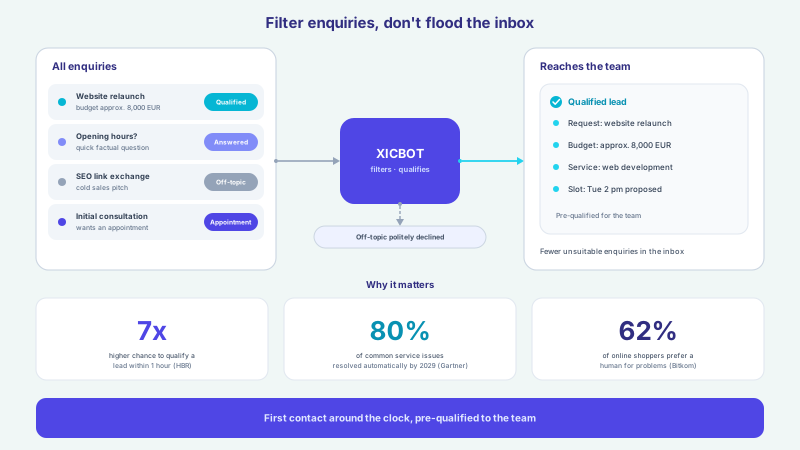
Because the assistant is bound to your own content, it also recognises when an enquiry does not fall within your field at all, and points the way politely instead of producing a useless contact. The captured details land in structured form where you work: in the email inbox, in a system connected in the Custom package or as a prepared lead with all the fields. How the assistant carries out such handovers safely through clearly defined actions is described on the tool control page. What feeds it, so it answers correctly and invents nothing, is governed by the knowledge base.
From Chat to Callback: No Lost Job
The speed of the first reaction often decides the award of the job in the trades. Whoever gets back first is ahead in the customer's mind. A widely cited study shows that companies contacting a prospect within an hour are around 7 times (Harvard Business Review) more likely to hold a qualifying conversation than those who wait even an hour longer. The assistant does not squander these critical minutes: it answers in the chat, keeps the customer in the conversation and captures the enquiry while attention is still there. A night-time enquiry thus becomes not a lost contact but a prepared callback for the next morning.
The customer who writes at ten in the evening is often already under contract with a competitor by nine the next morning. Whoever captures the enquiry cleanly overnight calls back first in the morning.
The clean handover to the human is key here. The assistant takes and prepares, but the actual job, the advice and the award stay with the business. As soon as things get personal, technical or sensitive, it is meant to hand over to you with the full conversation context, by email to your team or, in the Custom package, as a ticket in your ticketing system. How this transition from assistant to team member works smoothly and when it is triggered is described in the article AI assistant: handover to staff. The same basic principle, that no contact gets lost, applies incidentally in the online shop too, where you can recover abandoned carts in chat.
Reachable on the Job Site and After Hours
The biggest difference between the trades and a classic office is the workplace. A tradesperson does not sit at a desk next to the phone but stands on scaffolding, lies under a washbasin or drives from site to site. In this reality the phone is often the worst channel because it rings at exactly the wrong moment. An assistant that takes enquiries independently decouples reachability from being at the phone. You no longer have to choose between the job and the call: the assistant catches the first contact, and you get back in touch when your work allows, with all the information already in hand.
The evening enquiry gets a home this way too. Many customers research only after hours, when the tap drips or the facade shows cracks, and that is exactly when the business has long closed. The assistant takes these enquiries, classifies them and lays out the callback for the next working day. For international or multilingual clientele, for example in urban areas with many newcomers, it can also take the enquiry in another language; how that works is described on the multilingual page. This keeps the business reachable without anyone sitting at the phone evening after evening.
The Trades Are Digitalising Slowly
The willingness is there, the implementation lags behind. In a representative survey of craft businesses, 89 percent (Bitkom) see digitalisation as an opportunity, but only 4 percent (Bitkom) use artificial intelligence so far. Still, 85 percent (Bitkom) offer at least one digital service, most often sending quotes digitally at 68 percent (Bitkom). With appointment scheduling, by contrast, a gap opens up: only 48 percent (Bitkom) enable online booking, and although 88 percent (Bitkom) of businesses are listed in online business directories, the digital path ends for many customers exactly where it gets interesting, namely at the concrete enquiry.
With end customers the same gap shows: only 9 percent (Bitkom) of people in Germany have ever booked a tradesperson appointment online, but 27 percent (Bitkom) can imagine doing so. Between this willingness and the actual offer lies the competitive advantage for businesses that offer a low-threshold, directly reachable point of contact early. A chat assistant is a pragmatic entry point for this because it requires neither a major software changeover nor new staff, but is embedded into the existing website with a short snippet. How the expectation of fast, visible results weighs against the effort is examined in the article qualifying leads via chat.
| Aspect | Phone and voicemail | AI assistant in chat |
|---|---|---|
| Reachability | Only during office hours, often not on site | Around the clock, after hours too |
| Parallel enquiries | One after another | Any number at the same time |
| Job details | Only in the return call, often patchy | Captured in structured form before the callback |
| Emergencies | Get buried in voicemail | Recognised and handed to the inbox with a reason |
| Callback | Without context, several attempts | Prepared, with preferred time and details |
| Nights and weekends | Customer moves to the competition | Enquiry captured cleanly |
What the Assistant Deliberately Does Not Do
A good trades assistant replaces neither a skilled worker nor on-site advice; it relieves them. It gives no binding price commitment and no remote technical diagnosis, because whether damage is fixed with one move or a whole new installation is decided by the expert at the object. What the assistant delivers is the reliable first contact: take, sort, prepare and hand over. Honesty in expectation is just as important: an AI assistant works with the content it is trained on and can be wrong. That is why a properly set up assistant binds its answers to your own sources and passes uncertain matters to humans instead of inventing something. With sensitive topics, upset customers or unusual special cases, the right answer is not a forced closure but a clean handover to you.
To Your Own Trades Assistant in a Few Steps
The path to your own trades assistant begins with a short look at your trades, your service area and the most common enquiries. On this basis the assistant is trained individually, adjusted to your workflows and embedded into the website with a short snippet. After that it takes enquiries while you work and prepares your callbacks. A fixed rate cannot seriously be promised, because how many enquiries become jobs depends on offer, region and website. What is reliable, by contrast, is the mechanism: reachable around the clock, an answer in seconds, the job captured in structured form and the callback arranged. Data protection remains important, because the assistant processes contact data and job details; how that is handled with hosting in Germany and a clear deletion concept is described on the privacy and hosting page. An overview of all functions and packages is given by the services, and if you would like to play this through on your own case, you can request a free demo for your trade business.
- Define trades, service area and common enquiries so the assistant answers aptly
- Clearly separate emergency and plannable jobs and define priorities
- Set the fields to capture: trade, location, urgency, contact, photos
- Clearly govern the handover to the business for personal and urgent cases
- Secure data protection and hosting in Germany contractually
- Keep refining through the conversation analytics where enquiries break off
Frequent questions
Does the assistant take enquiries at night and at the weekend too?
Yes. The assistant is present on your website around the clock and replies in seconds, after hours, at the weekend and on public holidays too. It greets the visitor, clarifies the concern in a few follow-up questions and captures trade, location, urgency and contact data. A night-time enquiry thus becomes not a lost contact but a prepared callback for the next working day. This matters especially in the trades, because a large share of enquiries arises outside office hours and 85 percent (Bitkom) of businesses see rising demands on reachability.
How does the assistant tell emergencies from plannable jobs?
The assistant asks early about trade, location and urgency and separates the real emergency from the plannable job by these. A burst pipe or heating failure is recognised as urgent and handed to the inbox with a reason; a routing rule can assign it there straight away to the emergency team. A plannable job like a bathroom project is taken at a calm pace, including details and optionally a photo, and leads to a callback or appointment at the preferred time. This way the emergency does not get buried among the non-binding quote enquiries.
Does the assistant replace my business or my advice?
No, it relieves you. The assistant takes the first contact, captures the enquiry in structured form and prepares the callback, but the actual job, the technical assessment and the on-site advice stay with you. It is not meant to give a binding price commitment or a remote diagnosis. As soon as things get personal, technical or sensitive, it is meant to hand over to you with full conversation context, by email to your team or, in the Custom package, as a ticket in your ticketing system. This keeps personal contact intact while the recurring intake runs automatically.
Which job details does the assistant capture?
As a rule the trade and type of service, location and travel, urgency, a rough scope, the contact data and a preferred time for the callback. On request it also accepts a photo of the damage so you can better estimate the effort. Exactly which fields are captured we define together, tailored to your business. In the end there is a structured job instead of an informal note, so you call back prepared without first having to chase the concern by phone.
How does the enquiry reach me?
The assistant hands the captured enquiry in structured form to where you work: your email inbox, a system connected in the Custom package or a prepared lead with all the fields. Instead of an informal message, a cleanly assigned record arrives, ready to process. Through clearly defined actions the assistant can also arrange appointments or trigger a callback. The integration itself happens with a short code snippet, without you having to rebuild your existing website.
Is capturing data in the chat privacy-compliant?
Yes, when it is set up properly. At XICBOT, hosting is in Germany and the answers are generated by a specialised model provider, also outside the EU on the basis of standard contractual clauses; there is a data processing agreement, data sovereignty and a clear deletion concept. The assistant asks only for the data needed to handle the request, such as name, contact, location and concern, and states the purpose transparently. European or self-hosted language models are possible as a separate project by arrangement; they are not included in standard operation. This data economy is at the same time a signal of trust that raises the willingness to share details.
Ask it yourself, Assistant of this website
Automated assistant