Zero-Click Search: Keeping Visitors With an AI Assistant
AI answers in search cut the clicks. Whoever still reaches the page wants a direct answer: how an AI assistant catches, keeps and converts these visitors.
In plain language
Many search engines now show an AI answer of their own. Then fewer people click through to a website. Those who still come want something clear, like a price, a date or a plain fact. An assistant on the website gives this answer directly and suggests the next step. Many people already use AI chats to search, and some have got false facts that way. So an assistant for a firm only answers from set sources. It is meant to pass unclear cases to a person. Nobody can promise a fixed rise in enquiries.
Search is changing faster than any website can react. Where ten blue links once stood, an AI summary now sits at the top, answering the question directly and making the click to the actual website unnecessary. The result is called zero-click search: the query ends without any source being visited. How strong the effect is is shown by a Pew Research Center study of the search behaviour of adults in the United States. On pages with an AI summary, users clicked a regular search result in only 8 percent (Pew Research Center) of cases, compared with 15 percent (Pew Research Center) without such a summary, almost a halving. For companies this means: a growing share of the people interested in an offer no longer land on the website at all. That makes every visitor who still arrives more valuable. This is exactly where an on-site AI assistant comes in. It catches the people who click through after the AI answer, answers their concrete question directly and guides them to a contact, an enquiry or a purchase, instead of letting them bounce again. This article puts the numbers in context, explains why the remaining visitors now expect more than a static page, and shows how a source-bound assistant gets more results out of shrinking traffic.
%3C%2Ftext%3E%3Ctext%20x%3D'48'%20y%3D'246'%20font-family%3D'system-ui%2C%20sans-serif'%20font-size%3D'9'%20font-weight%3D'700'%20fill%3D'%2364748b'%3EOrganic%20results%3C%2Ftext%3E%3Crect%20x%3D'48'%20y%3D'254'%20width%3D'180'%20height%3D'8'%20rx%3D'2'%20fill%3D'%23818cf8'%2F%3E%3Crect%20x%3D'48'%20y%3D'266'%20width%3D'250'%20height%3D'6'%20rx%3D'2'%20fill%3D'%23e2e8f0'%2F%3E%3Crect%20x%3D'48'%20y%3D'276'%20width%3D'228'%20height%3D'6'%20rx%3D'2'%20fill%3D'%23e2e8f0'%2F%3E%3Crect%20x%3D'48'%20y%3D'292'%20width%3D'150'%20height%3D'8'%20rx%3D'2'%20fill%3D'%23a5b4fc'%2F%3E%3Crect%20x%3D'48'%20y%3D'304'%20width%3D'250'%20height%3D'6'%20rx%3D'2'%20fill%3D'%23e2e8f0'%2F%3E%3Crect%20x%3D'48'%20y%3D'322'%20width%3D'268'%20height%3D'66'%20rx%3D'8'%20fill%3D'%23ffffff'%20stroke%3D'%23a5b4fc'%20stroke-width%3D'1.2'%2F%3E%3Ctext%20x%3D'60'%20y%3D'368'%20font-family%3D'system-ui%2C%20sans-serif'%20font-size%3D'30'%20font-weight%3D'800'%20fill%3D'%234f46e5'%3E8%25%3C%2Ftext%3E%3Ctext%20x%3D'112'%20y%3D'344'%20font-family%3D'system-ui%2C%20sans-serif'%20font-size%3D'9'%20fill%3D'%23475569'%3Eof%20visits%20with%20AI%20answer%3C%2Ftext%3E%3Ctext%20x%3D'112'%20y%3D'358'%20font-family%3D'system-ui%2C%20sans-serif'%20font-size%3D'9'%20fill%3D'%23475569'%3Estill%20lead%20to%20a%20click%20on%20a%20result%3C%2Ftext%3E%3Ctext%20x%3D'112'%20y%3D'374'%20font-family%3D'system-ui%2C%20sans-serif'%20font-size%3D'8'%20fill%3D'%2394a3b8'%3E15%25%20without%20AI%20answer%20(Pew)%3C%2Ftext%3E%3Ctext%20x%3D'358'%20y%3D'206'%20font-family%3D'system-ui%2C%20sans-serif'%20font-size%3D'8'%20font-weight%3D'700'%20fill%3D'%234338ca'%20text-anchor%3D'middle'%3Ethe%20click%3C%2Ftext%3E%3Cline%20x1%3D'336'%20y1%3D'220'%20x2%3D'378'%20y2%3D'220'%20stroke%3D'%234f46e5'%20stroke-width%3D'3'%2F%3E%3Cpolygon%20points%3D'378%2C214%20388%2C220%20378%2C226'%20fill%3D'%234f46e5'%2F%3E%3Crect%20x%3D'384'%20y%3D'50'%20width%3D'384'%20height%3D'352'%20rx%3D'14'%20fill%3D'%23ffffff'%20stroke%3D'%23cbd5e1'%20stroke-width%3D'1.4'%2F%3E%3Ctext%20x%3D'400'%20y%3D'74'%20font-family%3D'system-ui%2C%20sans-serif'%20font-size%3D'11'%20font-weight%3D'700'%20fill%3D'%23312e81'%3EYour%20website%20with%20assistant%3C%2Ftext%3E%3Crect%20x%3D'400'%20y%3D'84'%20width%3D'352'%20height%3D'128'%20rx%3D'8'%20fill%3D'%23f8fafc'%20stroke%3D'%23e2e8f0'%20stroke-width%3D'1'%2F%3E%3Ccircle%20cx%3D'414'%20cy%3D'95'%20r%3D'3'%20fill%3D'%23c7d2fe'%2F%3E%3Ccircle%20cx%3D'424'%20cy%3D'95'%20r%3D'3'%20fill%3D'%23c7d2fe'%2F%3E%3Ccircle%20cx%3D'434'%20cy%3D'95'%20r%3D'3'%20fill%3D'%23c7d2fe'%2F%3E%3Crect%20x%3D'414'%20y%3D'116'%20width%3D'150'%20height%3D'11'%20rx%3D'3'%20fill%3D'%23c7d2fe'%2F%3E%3Crect%20x%3D'414'%20y%3D'134'%20width%3D'300'%20height%3D'6'%20rx%3D'2'%20fill%3D'%23e2e8f0'%2F%3E%3Crect%20x%3D'414'%20y%3D'146'%20width%3D'280'%20height%3D'6'%20rx%3D'2'%20fill%3D'%23e2e8f0'%2F%3E%3Crect%20x%3D'414'%20y%3D'158'%20width%3D'300'%20height%3D'6'%20rx%3D'2'%20fill%3D'%23e2e8f0'%2F%3E%3Crect%20x%3D'414'%20y%3D'176'%20width%3D'90'%20height%3D'22'%20rx%3D'6'%20fill%3D'%234f46e5'%2F%3E%3Ctext%20x%3D'459'%20y%3D'191'%20font-family%3D'system-ui%2C%20sans-serif'%20font-size%3D'9'%20font-weight%3D'700'%20fill%3D'%23ffffff'%20text-anchor%3D'middle'%3EQuote%3C%2Ftext%3E%3Crect%20x%3D'400'%20y%3D'224'%20width%3D'214'%20height%3D'164'%20rx%3D'10'%20fill%3D'%23ffffff'%20stroke%3D'%23a5b4fc'%20stroke-width%3D'1.3'%2F%3E%3Cpath%20d%3D'M400%20234%20a10%2010%200%200%201%2010%20-10%20h194%20a10%2010%200%200%201%2010%2010%20v16%20h-214%20z'%20fill%3D'%23312e81'%2F%3E%3Ccircle%20cx%3D'412'%20cy%3D'238'%20r%3D'3.5'%20fill%3D'%2322d3ee'%2F%3E%3Ctext%20x%3D'422'%20y%3D'241'%20font-family%3D'system-ui%2C%20sans-serif'%20font-size%3D'8'%20font-weight%3D'700'%20fill%3D'%23e0e7ff'%3EAssistant%3C%2Ftext%3E%3Crect%20x%3D'410'%20y%3D'258'%20width%3D'194'%20height%3D'36'%20rx%3D'8'%20fill%3D'%23e0e7ff'%20stroke%3D'%23c7d2fe'%20stroke-width%3D'1'%2F%3E%3Ctext%20x%3D'420'%20y%3D'273'%20font-family%3D'system-ui%2C%20sans-serif'%20font-size%3D'8'%20fill%3D'%231e293b'%3EWelcome!%20Are%20you%20looking%20for%3C%2Ftext%3E%3Ctext%20x%3D'420'%20y%3D'285'%20font-family%3D'system-ui%2C%20sans-serif'%20font-size%3D'8'%20fill%3D'%231e293b'%3Eadvice%20or%20a%20quote%3F%3C%2Ftext%3E%3Crect%20x%3D'410'%20y%3D'302'%20width%3D'72'%20height%3D'18'%20rx%3D'9'%20fill%3D'%23ffffff'%20stroke%3D'%23a5b4fc'%20stroke-width%3D'1'%2F%3E%3Ctext%20x%3D'446'%20y%3D'314'%20font-family%3D'system-ui%2C%20sans-serif'%20font-size%3D'8'%20fill%3D'%234338ca'%20text-anchor%3D'middle'%3EAdvice%3C%2Ftext%3E%3Crect%20x%3D'488'%20y%3D'302'%20width%3D'66'%20height%3D'18'%20rx%3D'9'%20fill%3D'%23ffffff'%20stroke%3D'%23a5b4fc'%20stroke-width%3D'1'%2F%3E%3Ctext%20x%3D'521'%20y%3D'314'%20font-family%3D'system-ui%2C%20sans-serif'%20font-size%3D'8'%20fill%3D'%234338ca'%20text-anchor%3D'middle'%3EQuote%3C%2Ftext%3E%3Crect%20x%3D'486'%20y%3D'326'%20width%3D'118'%20height%3D'24'%20rx%3D'8'%20fill%3D'%234f46e5'%2F%3E%3Ctext%20x%3D'545'%20y%3D'341'%20font-family%3D'system-ui%2C%20sans-serif'%20font-size%3D'8'%20fill%3D'%23ffffff'%20text-anchor%3D'middle'%3EI%20need%20a%20quote%3C%2Ftext%3E%3Crect%20x%3D'410'%20y%3D'358'%20width%3D'150'%20height%3D'20'%20rx%3D'10'%20fill%3D'%23f1f5f9'%20stroke%3D'%23cbd5e1'%20stroke-width%3D'1'%2F%3E%3Ctext%20x%3D'420'%20y%3D'372'%20font-family%3D'system-ui%2C%20sans-serif'%20font-size%3D'7.5'%20fill%3D'%2394a3b8'%3EWrite%20a%20message%20...%3C%2Ftext%3E%3Ccircle%20cx%3D'584'%20cy%3D'368'%20r%3D'12'%20fill%3D'%234f46e5'%2F%3E%3Cpolygon%20points%3D'579%2C363%20591%2C368%20579%2C373'%20fill%3D'%23ffffff'%2F%3E%3Crect%20x%3D'626'%20y%3D'224'%20width%3D'126'%20height%3D'164'%20rx%3D'10'%20fill%3D'%23ecfeff'%20stroke%3D'%2367e8f9'%20stroke-width%3D'1.3'%2F%3E%3Ctext%20x%3D'689'%20y%3D'246'%20font-family%3D'system-ui%2C%20sans-serif'%20font-size%3D'9'%20font-weight%3D'700'%20fill%3D'%230e7490'%20text-anchor%3D'middle'%3ELead%20captured%3C%2Ftext%3E%3Ccircle%20cx%3D'689'%20cy%3D'276'%20r%3D'16'%20fill%3D'%2306b6d4'%2F%3E%3Cpath%20d%3D'M681%20276%20l6%206%20l10%20-12'%20fill%3D'none'%20stroke%3D'%23ffffff'%20stroke-width%3D'3'%20stroke-linecap%3D'round'%20stroke-linejoin%3D'round'%2F%3E%3Ccircle%20cx%3D'640'%20cy%3D'306'%20r%3D'2.5'%20fill%3D'%230891b2'%2F%3E%3Ctext%20x%3D'648'%20y%3D'309'%20font-family%3D'system-ui%2C%20sans-serif'%20font-size%3D'7.5'%20fill%3D'%23334155'%3EName%20and%20email%3C%2Ftext%3E%3Ccircle%20cx%3D'640'%20cy%3D'324'%20r%3D'2.5'%20fill%3D'%230891b2'%2F%3E%3Ctext%20x%3D'648'%20y%3D'327'%20font-family%3D'system-ui%2C%20sans-serif'%20font-size%3D'7.5'%20fill%3D'%23334155'%3EIntent%20recognised%3C%2Ftext%3E%3Ccircle%20cx%3D'640'%20cy%3D'342'%20r%3D'2.5'%20fill%3D'%230891b2'%2F%3E%3Ctext%20x%3D'648'%20y%3D'345'%20font-family%3D'system-ui%2C%20sans-serif'%20font-size%3D'7.5'%20fill%3D'%23334155'%3ENext%20step%3C%2Ftext%3E%3Ccircle%20cx%3D'640'%20cy%3D'360'%20r%3D'2.5'%20fill%3D'%230891b2'%2F%3E%3Ctext%20x%3D'648'%20y%3D'363'%20font-family%3D'system-ui%2C%20sans-serif'%20font-size%3D'7.5'%20fill%3D'%23334155'%3Eto%20sales%3C%2Ftext%3E%3Ctext%20x%3D'400'%20y%3D'428'%20font-family%3D'system-ui%2C%20sans-serif'%20font-size%3D'9.5'%20font-weight%3D'600'%20fill%3D'%23334155'%20text-anchor%3D'middle'%3EAI%20answers%20cut%20clicks%2C%20the%20assistant%20keeps%20the%20visitors%20who%20still%20come%3C%2Ftext%3E%3C%2Fsvg%3E)
Labels in the illustration
- solar panel quote
- AI answer
- source click in only 1% of visits (Pew)
- Organic results
- 8%
- of visits with AI answer
- still lead to a click on a result
- 15% without AI answer (Pew)
- the click
- Your website with assistant
- Quote
- Assistant
- Welcome! Are you looking for
- advice or a quote?
- Advice
- Quote
- I need a quote
- Write a message ...
- Lead captured
- Name and email
- Intent recognised
- Next step
- to sales
- AI answers cut clicks, the assistant keeps the visitors who still come
What Zero-Click Search Means and Why It Is Growing
Zero-click search describes queries that end without an external website being opened. The answer already sits on the search results page itself, as an info box, as a direct figure or, increasingly, as an AI-generated summary that condenses several sources into flowing text. For simple facts this was true for a long time; what is new is that AI overviews now also answer advice-heavy questions, where a click to a specialist page used to be the obvious step. That almost everything runs through a single provider sharpens the situation: in 2018, a single offering held a market share of more than 90 percent (European Commission) in general internet search in most EEA member states. When that offering provides the answer itself, the reach of many websites shifts noticeably. The market for attention narrows, and this hits especially those companies that have so far relied heavily on organic search results.
The effect is measurable, not just felt. The Pew Research Center analysed the actual browsing behaviour of around 900 adults in the United States. In the month studied, a good half, namely 58 percent (Pew Research Center) of participants, saw at least one AI summary in their search results; the feature is no longer a fringe phenomenon but everyday life. And where it appeared, people clicked on a regular search result markedly less often: in 8 percent (Pew Research Center) of visits, compared with 15 percent (Pew Research Center) on search pages without a summary. The links within the AI summary itself were clicked in only 1 percent (Pew Research Center) of visits to search pages with a summary. For the website at the end of the chain, each of these figures means the same thing: fewer opportunities to be seen at all.
How AI Answers Cut the Clicks
The mechanics behind it are simple. Someone who asks a question and immediately gets a usable answer has less reason to click on. For simple facts this was true for a long time; for more complex topics, the click to a detailed page used to be the natural next step. The AI summary anticipates exactly this step. On top of that comes a second effect: after a search page with a summary, the session ends altogether more often. On 26 percent (Pew Research Center) of visits to such pages the browsing session then ended, compared with 16 percent (Pew Research Center) for search pages without a summary. The path to the website thus narrows in two places at once.
-
Answer without a click
The AI summary answers many questions directly in search; a source linked in it is clicked in only around 1 percent (Pew Research Center) of visits to search pages with a summary.
-
Session ends sooner
On 26 percent (Pew Research Center) of visits to a search page with an AI summary the browsing session then ends, compared with 16 percent (Pew Research Center) without a summary.
-
Search shifts away
50 percent (Bitkom) of internet users in Germany already turn at least occasionally to AI chats instead of the classic search engine, and two thirds (Bitkom) among 16- to 29-year-olds.
That does not make search engine work pointless; being visible remains the precondition for appearing as a source in an AI overview at all. But it means the single click that still comes is worth far more than before and must not fizzle out on a mute page. How an assistant works in the first place and what sets it apart from a rigid contact form is explained in the article on what an AI chat assistant is.
Whoever Still Arrives Expects a Direct Answer
The people who still click to a website despite the AI answer are a special group. They have read the short version and want more: a concrete price, an availability, a binding statement, an appointment. They are used to instant answers because search has just delivered one to them. A website that then presents only another wall of text they have to work through themselves disappoints this expectation. The break is real: 50 percent (Bitkom) of internet users in Germany already turn at least occasionally to AI chats instead of the classic search engine, and among 16- to 29-year-olds it is as much as two thirds (Bitkom). These users are used to conversational answering; they type a question and get an answer. Anyone who receives them on their own site with a search box and five subpages works against a habit that is currently establishing itself everywhere.
The most expensive visitor is the one who was already there
Whoever clicks to your page beyond an AI answer has already proven their interest and cleared the decisive hurdle. Letting them leave again without an answer is more costly than any missed click higher up in search: the reach for it has grown scarcer, and this one visitor was close to the next step. It is exactly here that it is decided whether scarce traffic turns into results or fizzles out unused.
The On-Site Assistant Catches Exactly These Visitors
An AI assistant on your own website closes the gap between the expectation search has raised and what a static page can offer. It meets the visitor in the same format that brought them there: question in, answer out. Instead of clicking through the navigation, the visitor phrases their request and directly gets a concrete answer, source-bound from the company's own content, not from a general language model that would guess. This turns the logic around: the scarce reach of search is not squandered a second time by a sluggish page; instead, the assistant turns the single click into a conversation heading towards a goal. How such an assistant can be embedded cleanly without slowing the page down is covered in the article on how to embed an AI assistant into a website and shop.
-
Direct and in dialogue
The assistant answers in the same question-and-answer format as search, without a queue and around the clock, and so meets the expectation the visitor arrived with.
-
Guide to the next step
Instead of scattering the visitor across subpages, the assistant guides them purposefully to the fitting offer, form or appointment and names the concrete next step.
-
Source-bound, not guessed
The answers come from the company's own pages and documents; on sensitive or unclear questions the assistant is meant to hand over to a human.
How differently this looks depending on the business is shown by a look into individual sectors: a studio that answers questions about rates, classes and trial sessions around the clock works differently from a firm that has to pre-qualify a flood of enquiries. Concrete examples are described in the articles on the AI assistant for gyms and the AI assistant for solar installers and energy consultants. In both cases it is the same task: not to lose the visitor who still arrives after the AI answer.
From Visitor to Lead: Convert Instead of Lose
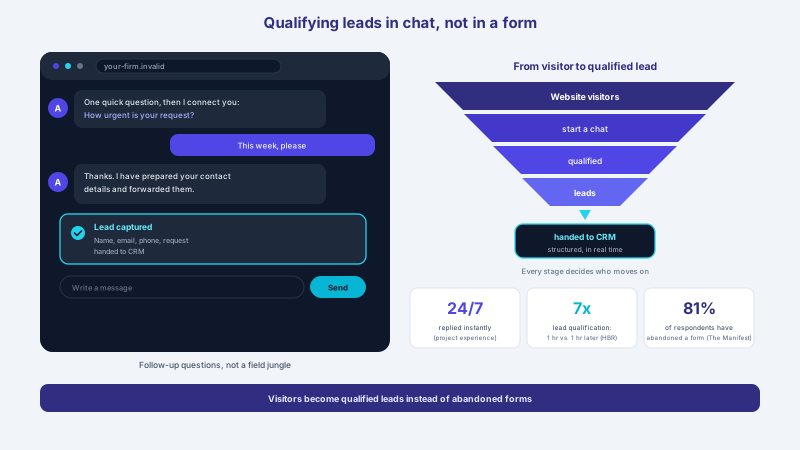
Catching them alone is not enough; the visit has to lead to a result. This is exactly where the record of many websites is sobering. In online retail, the average cart abandonment rate stands at around 70 percent (Baymard Institute), and, leaving aside mere browsing, extra costs for shipping, taxes and fees that are too high are the most common reason for abandonment during checkout: in a survey of online shoppers in the United States, 40 percent (Baymard Institute) said they had abandoned a purchase for this reason. The same dynamic applies to service providers: an open question about price, process or availability that goes unanswered becomes a silent drop-off. An assistant that answers exactly this question in the moment of hesitation and records the request in a structured way works directly against abandonment. It takes down name and contact, recognises the actual concern and suggests the next step; an anonymous visit becomes a traceable enquiry. How to pre-qualify enquiries cleanly in chat is deepened in the article on qualifying leads via chat; the fitting building block is bundled on the page for the lead assistant.
| Situation | Without assistant | With AI assistant |
|---|---|---|
| Visitor arrives after the AI answer | Lands on a text page and searches alone | Asks their question and gets a direct answer |
| Concrete question on price or process | Stays open, the visitor bounces | Is answered directly from the company's own content |
| Interest is there, the step is missing | No visible next step | Guides to contact, enquiry or appointment |
| Request unclear or sensitive | Gets lost or lands unfiltered in the inbox | Is pre-qualified or handed over to a human |
| Outside business hours | No one answers, the visitor is gone | Answer around the clock, the enquiry is captured |
AI Search in Germany: Half of Internet Users Search Differently
The shift is not a purely American phenomenon. In Germany, half (Bitkom) of internet users already turn at least occasionally to AI chats for finding information, some even predominantly or exclusively. Among 16- to 29-year-olds the share is higher still, at two thirds (Bitkom); this is the clientele of tomorrow, who have already grown used to conversational searching. For companies this creates a double task: to appear as a source in AI-assisted search and at the same time to offer on the own site the same conversational experience that users now expect. Anyone who bets on only one of the two gives away the other. An on-site assistant serves the second half of this task directly.
- It answers in dialogue, the way search has just accustomed users to
- It answers the concrete question on price, process or availability directly
- It records the request in a structured way and suggests the next step
- It stays reachable around the clock, including outside business hours
- It relies on the own content instead of a general model
- It is meant to hand over to a human on sensitive or unclear questions
Source-Bound, Not Guessed: Why Trust Matters
The advantage of answering quickly has a downside that must not be glossed over: AI systems can be wrong. Of those who use AI for search, 42 percent (Bitkom) stated in the Bitkom survey that they had already received false or made-up information from an AI, and only 57 percent (Bitkom) check the AI answers before using them. For an assistant that speaks in a company's name, this is the decisive difference: it must not formulate freely but has to bind its answers to the checked own content, to prices, services and conditions the company itself is responsible for. This is exactly what a source-bound approach delivers, where the assistant draws from a defined knowledge base and, where coverage is missing, would rather forward than guess. How to avoid wrong answers this way is described in the article on preventing hallucinations with a knowledge base; which content belongs in such a base is shown on the page for the knowledge base.
A visitor who still arrives after the AI answer gives you a second chance. A guessed answer squanders it. An evidenced answer turns it into an enquiry.
What the Assistant Makes Measurable
Whether the assistant actually keeps the visitors it catches shows in the analysis. Conversation analytics makes visible which questions visitors really ask, at which point conversations break off and which requests most often lead to an enquiry. From this come concrete improvements: if a common question lacks a fitting answer in the knowledge base, it is added; if a certain entry leads to completion especially often, it is given more prominence. This way, more and more is drawn from the shrinking traffic, step by step. How to use this analysis is deepened in the article on analysing and optimising conversations; the concrete packages including hosting in Germany can be found on the pricing page.
With all its effect, an honest assessment belongs to it. A firm increase in enquiries or revenue cannot be assured, because it depends on the offer, the audience, prices and competition. What is influenceable is how you handle what actually arrives: picking up the remaining visitors in the familiar dialogue, answering their question with evidence and making the next step visible. That personal data is processed sparingly and traceably in the process, with hosting in Germany and a clear deletion concept, is set out on the page on data protection and hosting. An AI assistant can err; that is why it binds its statements to your own content and is meant to hand over to a human on sensitive topics. How an assistant catches visitors from search and qualifies their enquiries is shown on the lead assistant page; we are happy to run through this on your own pages with you via the contact page.
Frequent questions
What does zero-click search mean for my website?
It means that a growing share of queries ends without anyone clicking to an external page, because the answer is already in search. The Pew Research Center measured that Google users in the United States clicked on a search result in only 8 percent of visits to pages with an AI summary, compared with 15 percent without. For your website this means fewer visitors, but each one of them is more valuable. That is why it pays to catch the remaining visitors deliberately, instead of letting them search on a static page themselves.
Is search engine work still worthwhile at all, then?
Yes, because being visible remains the precondition for appearing as a source in an AI overview or being clicked as a regular result at all. The shift does not devalue visibility, but it makes the single click more expensive. The sensible thing is therefore to combine both: to stay findable in search and at the same time to make sure on your own site that a visit does not fizzle out unused. An on-site assistant takes over the second part.
How does an AI assistant catch the visitors who still arrive?
It meets the visitor in the same format that brought them there: it takes a question and delivers a concrete answer directly, instead of sending them through menus and subpages. The answer comes from the company's own content, and the assistant actively guides the visitor to the next step, such as an offer, a form or an appointment. This turns a short visit into a conversation heading towards a goal, around the clock and without a queue.
Does the assistant answer even when it does not know something?
A source-bound assistant is designed precisely not to guess in that case. In the Bitkom survey, 42 percent of those who use AI for search stated they had already received false or made-up information from it; that is why the assistant binds its statements to a defined knowledge base. Where coverage is missing there, it is meant to say so openly and forward, instead of inventing an uncertain answer. On sensitive or unclear requests it is meant to hand over to a human with the conversation history.
Does this make sense for service providers and individual sectors too?
Yes, the principle applies beyond the online shop to any business that receives enquiries via its website. A gym uses it to answer questions on rates and trial sessions, a solar firm pre-qualifies the flood of enquiries; the articles on the AI assistant for gyms and for solar installers show this concretely. What all cases share is the same task: to keep the visitor who still arrives after the AI answer with an instant, evidenced answer.
Can a certain increase in enquiries be assured?
No. A firm increase in enquiries or revenue depends on the offer, the audience, prices and competition and cannot be assured. What is influenceable is how you handle the visitors who actually arrive: picking them up in the familiar dialogue, answering their question with evidence and making the next step visible. Through conversation analytics you can continuously check which settings actually bring more conversations and enquiries.
Ask it yourself, Assistant of this website
Automated assistant